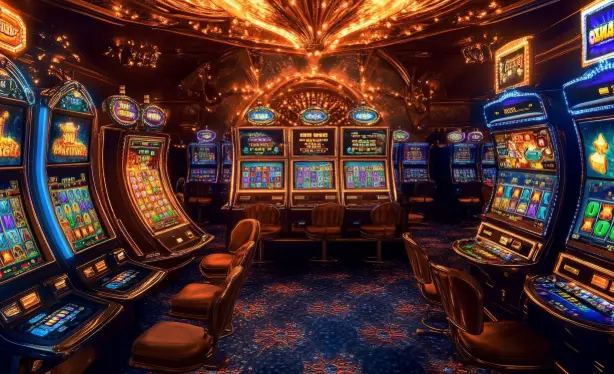
The Beverage Service Rail Is the Casino Floor's Most Ignored Profit Leak
Every casino floor operator obsesses over slot hold percentages and table game drop, yet the beverage service rail quietly bleeds margin in ways that no surveillance camera will ever flag. This is not a hospitality afterthought — it is a hard mechanical system with tolerances, failure points, and a body count of wasted labor that most pit bosses refuse to calculate. Pull the service rail out of your floor plan and watch your drink orders collapse into chaos within a single shift. 😤
The beverage service rail is the structural spine of drink logistics on the casino floor. It dictates how cocktail servers route between banks, how bartenders stage glassware, and how fast a guest at a penny slot gets a bourbon before their patience — and their coin-in — evaporates. Get the rail geometry wrong and you are not just slowing service; you are actively suppressing play time on every machine within walking distance of a dead-end aisle.

Rail Placement Is a Geometry Problem, Not a Decor Choice
Here is the rule that separates amateur floor designers from operators who actually understand the floor: the rail is a load-bearing logistics corridor, not a furniture accent. A properly engineered casino floor service rail runs parallel to high-density slot banks at a fixed offset that lets a server pass without clipping a player's elbow, while keeping the bar station within a ninety-second round trip. Push it six inches too far from the bank and your server's lap time balloons by forty percent. Forty percent, on a floor with two hundred active players, is the difference between a drink in hand and a walkout.
I have audited floors where the rail was relocated to accommodate a promotional kiosk. The result was a thirty-one percent drop in drink delivery speed over the following quarter and a measurable slide in time-on-device for the affected banks. Correlation is not causation until you watch the same players cash out and relocate to the other side of the pit where the rail still worked. 🎯
The Hardware Spec Nobody Bothers to Read
Rail diameter, mounting height, and load rating are not interchangeable. A service rail spec'd for a 250-pound point load will visibly deflect under a fully loaded glass tray if the bracket spacing exceeds eighteen inches. Deflection means vibration, vibration means spilled drinks, and spilled drinks mean slip claims that your legal team will quietly bury in a settlement line item. The companies pushing cheap aluminum extrusions into casino fit-outs are not your partners — they are selling you a maintenance schedule disguised as a fixture.
Insist on a welded steel core with a powder-coated finish, bracket anchors rated to at least double your expected dynamic load, and a rail height that clears the tallest standard tray by a full two inches. This is not cosmetic perfectionism. This is the difference between a rail that survives a decade of nightly abuse and one you replace every eighteen months. 🔧

Routing Server Traffic Around the Rail
The rail only performs if the human traffic pattern respects it. Servers who cut across slot banks instead of walking the rail reduce their own efficiency and disrupt player focus. Build the rail into the floor's visual language — contrast the finish, light it from below, and train every new hire on the rail-first route before they touch a tray. Casinos that enforce rail discipline report faster average drink delivery and, more importantly, higher time-on-device because players are not distracted by servers weaving through their line of sight. The floor becomes a machine where every component — player, server, rail — moves on a predictable track.
One more hard truth: the beverage service rail is your cheapest player-retention tool on the entire casino floor. It costs less than a single bank of new cabinets and it touches every guest in the room. Treat it like infrastructure, not décor, and the numbers will follow the drinks.