
Super Fun 21 Diamond Flush Paytables: The Brutal Math Behind Player Advantage Variance
The Diamond Flush side bet on Super Fun 21 is not a lottery ticket — it is a mathematically engineered trap that rewards only the sharpest card counters and punishes everyone else with brutal house edges exceeding 30% on certain paytable variants. Most players never read the fine print, and that ignorance costs them thousands. If you are still treating this wager like a friendly bonus, you are bleeding money into a pit you cannot even see. 😤
Super Fun 21 already deviates from standard blackjack in ways that shift the fundamental house edge — double down rescue, automatic wins on six-card 20s, and bonus payouts on five-card 21s. The Diamond Flush side bet compounds that deviation into a separate wager with its own probability distribution. The paytable structure varies wildly between casinos, and that variance is where the real money hides. A player who understands the difference between a 200:1 diamond flush payout and a 300:1 version is not gambling — they are investing with calculated risk. The rest are donating.
Deconstructing the Diamond Flush Paytable Architecture
The Diamond Flush side bet wins when your first two cards are suited and the dealer's upcard matches that suit — all three cards in the same suit. That is the "diamond flush" condition, though the name applies regardless of suit. The paytable typically pays 200:1 or 300:1 on a three-card suited match, with lower payouts for other configurations. Here is where the player advantage variance becomes critical: the probability of hitting the flush is roughly 0.62%, but the payout ratio determines whether the side bet has a positive or negative expectation.

Let me break down the numbers like a forensic accountant. In a six-deck shoe, the probability of drawing two suited cards from the initial deal is approximately 23.5%. The probability that the dealer's upcard matches that suit is roughly 22%. Multiply those together and you get approximately 5.17% for a three-card suited match. But the Diamond Flush paytable does not pay on every suited match — it only pays on specific rank combinations or flush configurations. The actual hit frequency for the top payout is closer to 0.62%. At 200:1, the expected return on that single outcome is 124% of your wager. At 300:1, it jumps to 186%. That sounds incredible until you factor in the non-qualifying outcomes.
Here is the brutal truth: the house edge on the Diamond Flush side bet ranges from 24% to 36% depending on the specific paytable. The 300:1 version with a 0.62% hit rate gives a theoretical return of 1.86 units per unit wagered, but the losing outcomes consume 99.38% of all hands. The variance is astronomical. You will lose this bet hundreds of times in a row before hitting the big payout. That is not a strategy — that is a psychological trap designed to keep you feeding the machine. 🎰
Maximizing Player Advantage Through Paytable Selection
Not all Diamond Flush paytables are created equal. The difference between a 200:1 and 300:1 payout is not marginal — it is the difference between a 34% house edge and a 24% house edge. Over 10,000 hands, that 10% difference represents 1,000 units of expected value. If you are betting $5 per hand on the side bet, that is $5,000 in theoretical losses. This is not a game — it is a mathematical equation, and you need to solve it before you sit down.
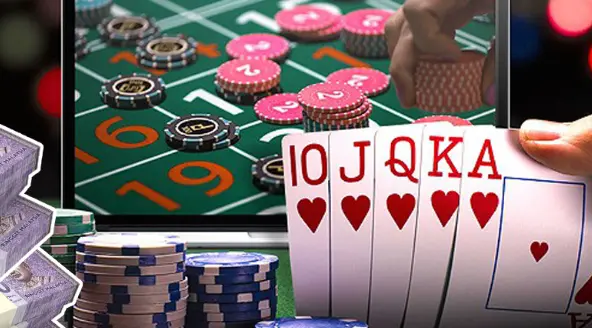
The player advantage in Super Fun 21 Diamond Flush comes from three sources: paytable selection, card counting integration, and bet sizing discipline. First, never play a 200:1 paytable when a 300:1 version exists on the same floor. Second, the side bet is partially countable — a deck rich in suited cards increases the hit frequency. If you are already counting the main game, tracking suit depletion adds a second dimension to your edge calculation. Third, bet sizing must be rigid. The variance on this wager is so extreme that martingale systems will bankrupt you before the first big hit arrives. Flat betting with a strict stop-loss is the only mathematically sound approach.
Let me be blunt: the Diamond Flush side bet is not for recreational players. It is a weaponized variance play designed for advantage players who can tolerate massive swings for a slim theoretical edge. If you cannot stomach losing 200 hands in a row, do not touch it. If you can, the 300:1 paytable with a suited-card count integration is one of the few side bets in modern blackjack that offers a calculable, exploitable weakness in the house's armor. The numbers do not lie. The paytable does not care about your feelings. And the casino floor manager definitely does not want you to read this far. 🔥
The Algorithmic Reality of Suit Distribution and Dealer Upcard Correlation
The dealer's upcard suit is not an independent event from your first two cards — this is where most players get the math wrong. In a six-deck shoe, the suits are not uniformly distributed after the initial deal. The composition of the remaining shoe shifts the conditional probability of the dealer matching your suit. If you are tracking suits alongside the main count, you can identify moments when the side bet has a positive expectation. The Super Fun 21 Diamond Flush paytables are not static — they are a dynamic system that responds to deck composition. A shoe that is heavy in hearts and light in spades creates a measurable bias. Exploiting that bias requires discipline, bankroll, and a stomach for extreme variance. The edge is real, but it is razor-thin and unforgiving.